Florida's Proposed Homestead Exemption Changes: What Homeowners Need to Know
Property taxes have become an increasingly important topic for Florida homeowners over the past several years.
As home values have increased across much of the state, many homeowners have experienced rising property tax bills and growing concerns about long-term affordability.
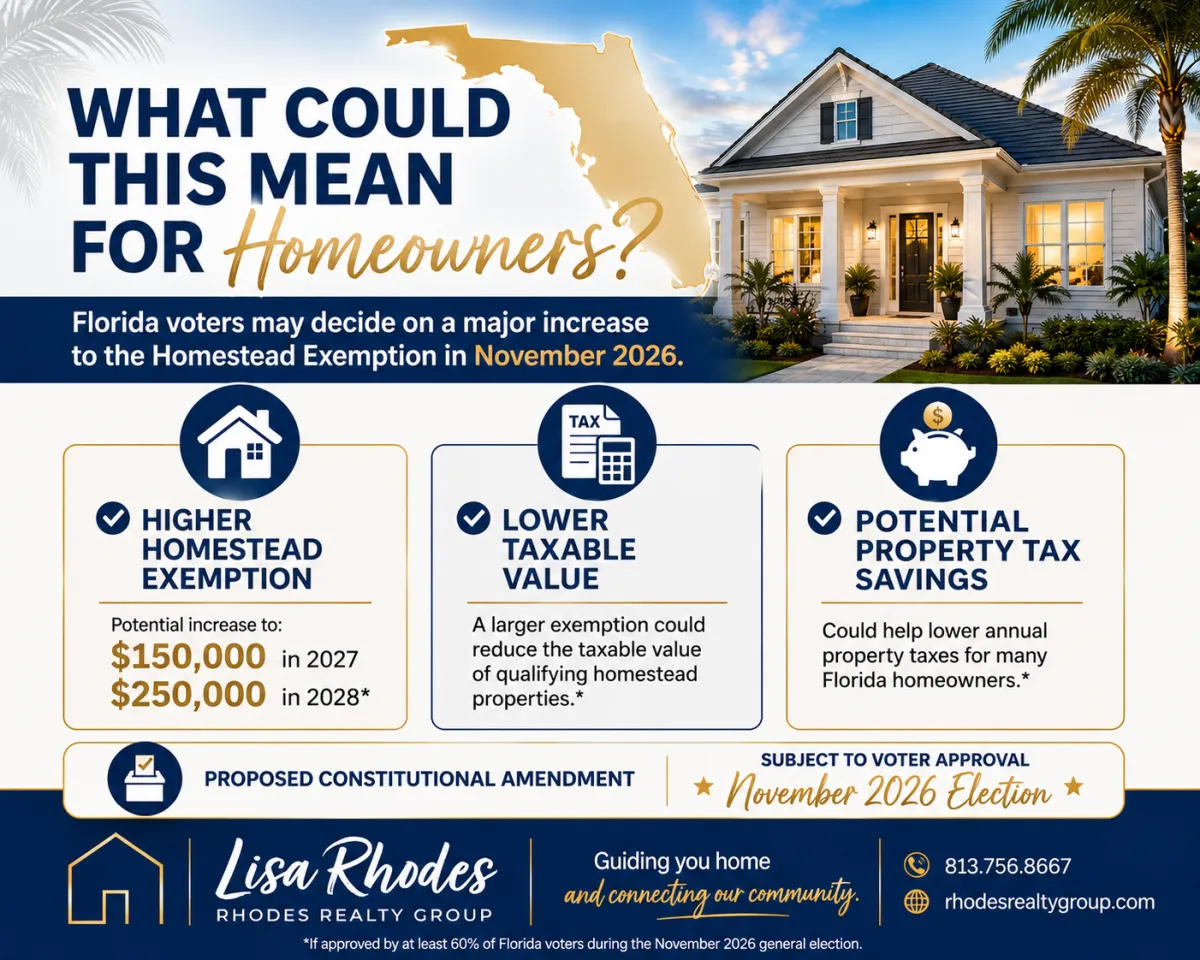
Now, a proposed constitutional amendment approved by the Florida Legislature could bring significant changes to Florida's homestead exemption system if voters approve it during the November 2026 election.
While the proposal is still subject to voter approval, it has the potential to impact homeowners, future buyers, investors, and local governments throughout Florida.
Here's what homeowners need to know.
What Is Florida's Homestead Exemption?
Florida's Homestead Exemption is one of the most valuable tax benefits available to homeowners.
For eligible Florida residents who make a property their permanent residence, the homestead exemption helps reduce the taxable value of their home, which can lower annual property taxes.
In addition to the tax savings, homeowners who qualify for homestead exemption also benefit from Florida's Save Our Homes protections, which help limit annual increases in assessed value for tax purposes.
For many Florida homeowners, homestead exemption provides both immediate savings and long-term protection.
What Is Being Proposed?
According to a recent Florida Realtors report, the Florida Legislature approved House Joint Resolution 1-F, a proposed constitutional amendment that would significantly expand homestead property tax exemptions and create a framework for future property tax relief. The proposal must be approved by at least 60% of Florida voters during the November general election before any changes can take effect.
If approved, the amendment would:
Increase the homestead exemption for the non-school portion of property taxes to $150,000 on January 1, 2027.
Increase the exemption again to $250,000 on January 1, 2028.
Adjust the exemption annually for inflation thereafter.
These proposed increases would represent one of the most significant expansions of Florida's homestead exemption system in decades.
What Could This Mean for Homeowners?
For homeowners who qualify for homestead exemption, a larger exemption could potentially reduce the taxable value of their property.
A lower taxable value generally means lower property taxes compared to what would otherwise be owed.
While individual savings would vary based on:
Property value
Local tax rates
County and municipal assessments
Applicable exemptions
many homeowners could see meaningful tax relief if the amendment is approved.
As always, property tax calculations vary by county and individual circumstances.
Changes for New Florida Residents
Another interesting aspect of the proposal involves individuals who become Florida residents after December 31, 2026.
Under the proposed amendment, these homeowners would initially receive a five-year homestead exemption on the first $50,000 of assessed value.
After five years of Florida residency, they would become eligible for the full homestead exemption available to Florida residents.
This provision appears designed to balance tax relief for existing Florida residents while still providing benefits to individuals relocating to the state.
Additional Relief for Non-Homestead Properties
The proposal doesn't only affect primary residences.
Currently, assessed values on non-homestead properties can increase by up to 10% annually for tax purposes.
Under the proposed amendment, that cap would be reduced to 5% beginning January 1, 2027.
This could impact:
Investment properties
Second homes
Commercial properties
Rental properties
by limiting future increases in taxable assessed values.
What About Future Property Tax Relief?
One of the more notable aspects of the proposal is that it establishes a framework for future property tax reductions.
According to the resolution, counties, municipalities, and school districts would participate in a uniform process established by the Legislature to consider additional property tax reductions in the future, potentially including complete elimination in certain circumstances. Special districts could also provide additional property tax relief with voter approval.
While those changes are not part of the current proposal, they indicate ongoing discussions regarding the future of property taxation in Florida.
Why This Matters to Homebuyers
For prospective homebuyers, property taxes are an important part of housing affordability.
When buyers calculate their monthly payment, they typically consider:
Principal
Interest
Property taxes
Homeowners insurance
HOA fees (if applicable)
If property taxes are reduced or grow more slowly over time, homeownership may become more affordable for some Florida residents.
That's one reason many homeowners and buyers will be paying close attention to this proposal in the coming months.
What Happens Next?
Because this is a proposed constitutional amendment, it does not require the governor's signature.
Instead, Florida voters will have the final say during the November 2026 election.
To become law, the amendment must receive approval from at least 60% of Florida voters.
Until then, Florida's current homestead exemption rules remain in effect.
Final Thoughts
Florida's proposed homestead exemption expansion could represent one of the most significant property tax changes in recent years.
If approved by voters, the amendment could increase homestead exemptions, provide additional protections for non-homestead properties, and potentially create new opportunities for future tax relief.
While the details will continue to be discussed leading up to the election, homeowners, future buyers, and investors should stay informed about how these proposed changes could affect their individual situations.
As always, if you're considering buying, selling, or investing in Florida real estate, understanding taxes and long-term ownership costs is an important part of making informed decisions.
I'm Lisa Rhodes, Broker/Owner of Rhodes Realty Group, where all Rhodes lead home.