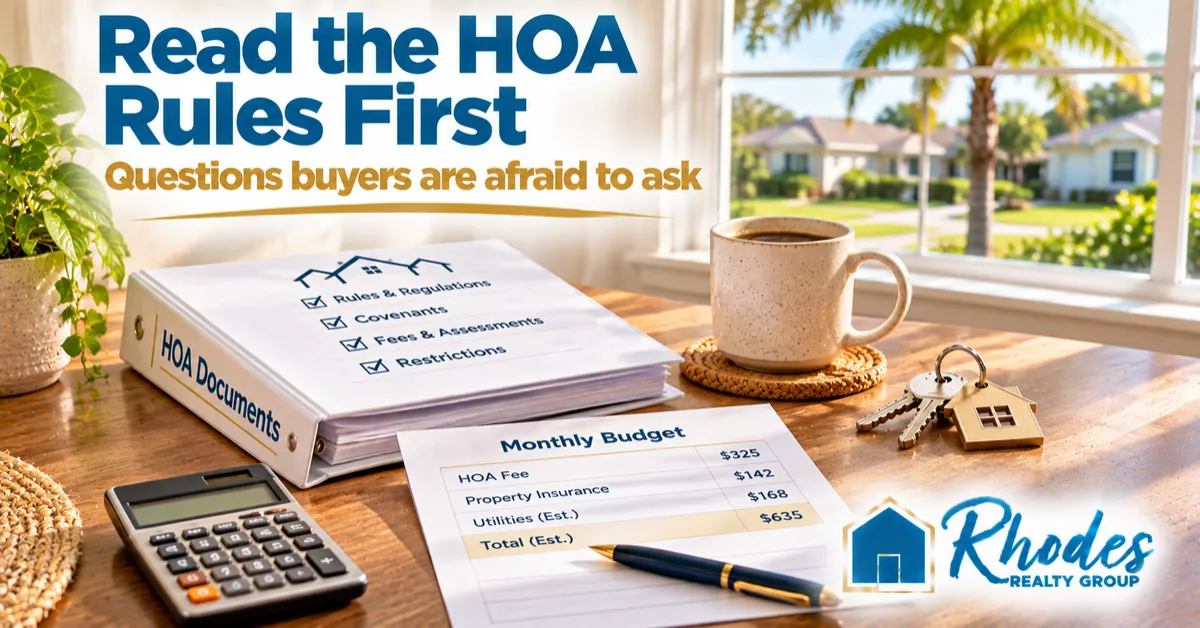
Questions Buyers Are Afraid to Ask: "What If I Don't Like the HOA Rules?"
You found a home you love. The kitchen works, the yard is the right size, and the drive to work is easy. Then someone mentions the HOA, and a quiet worry creeps in: what if the rules are too strict? What if I sign and then find out I can't live with them?
It's a fair question, and a common one. Many buyers feel awkward asking it, as if it means they're being difficult. They're not. Knowing the rules before you commit is simply part of buying a home well.
Why HOA rules matter more than people expect
A homeowners association can shape a lot about daily life in a community: what you can park in the driveway, whether you can add a fence or a shed, what colors you can paint, how trash cans are stored, and whether you can rent the home out later. Some buyers love that consistency. Others want more freedom. Neither is wrong. The goal is to find out which kind of community fits the way you actually live.
What Florida law gives you
Florida builds a little protection into the process. Under section 720.401 of the Florida Statutes, a buyer in a community governed by a homeowners association must be given a disclosure summary before signing the contract. If that summary wasn't provided first, the buyer may void the contract by written notice within 3 days after receiving it, or before closing, whichever comes first. That right ends at closing.
The disclosure summary itself also reminds buyers to review the covenants and governing documents before purchasing. Larger associations now have to make many records easier to reach as well: a 2024 Florida law requires associations with 100 or more parcels to post specified official records on a website or app for owners, starting January 1, 2025.
Every contract and community is different, so if you have questions about your rights in a specific situation, a real estate attorney is the right person to ask.
What to read before you're committed
You don't need to memorize a binder of documents. Focus on the parts that touch your plans:
- Declaration of covenants and restrictions. The big rules: use of the property, architectural approval, leasing and pets.
- Rules and regulations. Day-to-day items like parking, trash and exterior changes.
- The budget and dues. What you'll pay, how often, and what it covers.
- Recent meeting minutes. A quick read can show what neighbors are talking about, like planned projects or rule changes.
Make a short list of the things that matter most to you, like a work truck, a boat, a backyard project or a future rental, and look for those first.
Dues belong in your monthly budget
This is where the HOA question meets the bigger one. Buyers spend a lot of energy watching the Fed and rate headlines, but the numbers that decide whether a home fits are much closer to home: your monthly payment, your insurance, your taxes and, in many communities, your HOA dues. Add the dues to your monthly picture before you fall in love, and ask whether any special assessments are planned.
When your budget includes every piece, you can make a calm decision on your own timeline, whatever the headlines say that week. Your lender can help you see how dues factor into what you qualify for.
If the rules don't fit
Sometimes you read the documents and realize a community just isn't right. That's not a failure. It's the process working. Plant City and East Hillsborough offer a wide mix of homes, from established neighborhoods without an HOA to newer communities with amenities and rules to match, and rural properties with more room to spread out.
If you'd like help sorting through HOA documents or comparing communities, we're glad to walk through it with you. Call Rhodes Realty Group at 813-756-8667 or visit rhodesrealtygroup.com.
Lisa Rhodes, Broker/Owner, Rhodes Realty Group — where all Rhodes lead home.